
Ever caught yourself wondering how to spell bougie like fancy without sounding unsure? You’re not alone. This trendy word pops up everywhere—from social media captions to casual conversations—but its spelling and meaning can still trip people up.
In this guide, we’ll break it down in plain English: the correct spelling, what it actually means, how to use it naturally, and even a few fun examples. By the end, you’ll feel confident using “bougie” like it’s second nature.
What Does “Bougie” Mean?
Before diving into how to spell bougie like fancy?, let’s quickly understand the word itself.
“Bougie” is a slang term derived from bourgeois, a French word. Today, it’s used casually to describe someone or something that is:
- Fancy or luxurious
- Pretentious or trying to appear high-class
- Stylish in an upscale way
Example:
“She ordered sparkling water with lemon—so bougie!”
How to Spell Bougie Like Fancy
Here’s the simple answer:
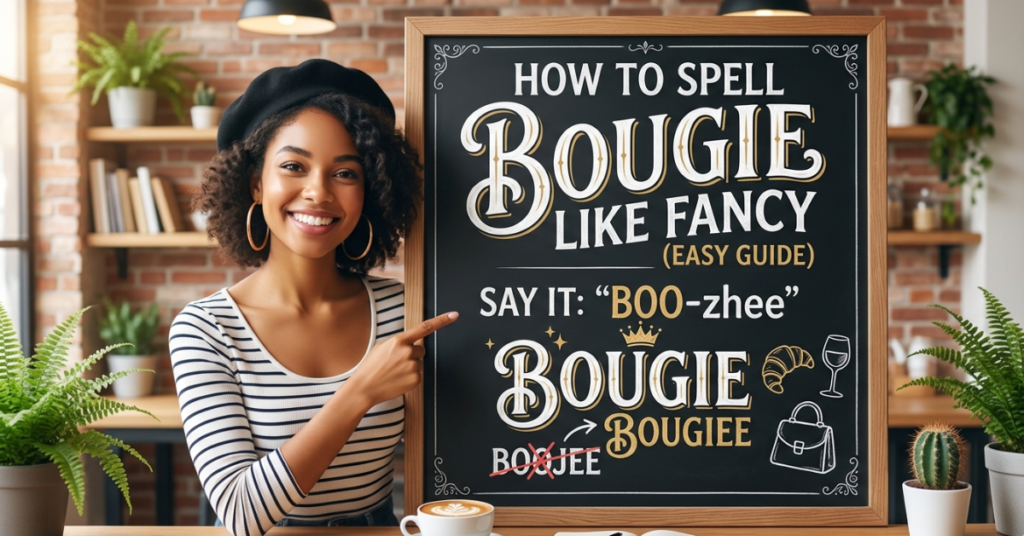
Correct spelling: Bougie
That’s it—no extra letters, no complicated variations.
Common Misspellings to Avoid
People often get confused because the word sounds like it could be spelled differently. Watch out for these incorrect versions:
- Boujee
- Boogie
- Bourgie
- Bouji
While “boujee” is sometimes used informally online, “bougie” is the standard and widely accepted spelling.
Why Is “Bougie” So Popular?
Language evolves fast, and “bougie” has become part of everyday slang thanks to pop culture and social media.
Here’s why it sticks:
- It’s short and catchy
- It adds personality to descriptions
- It blends humor with a bit of attitude
You might see it in captions like:
- “Good morning or good morning—either way, I need my bougie coffee.”
- “This brunch spot is way too bougie for me.”
How to Use “Bougie” in a Sentence
Once you understand how to spell bougie like fancy, using it correctly is easy.
Everyday Examples
- “He drives a luxury car—kind of bougie, honestly.”
- “We stayed at a bougie hotel with a rooftop pool.”
- “She has bougie taste in clothes.”
Tips for Natural Usage
- Use it casually, not in formal writing
- Pair it with lifestyle topics (food, fashion, travel)
- Keep the tone light or slightly playful
Bougie vs. Fancy: Is There a Difference?
Although “bougie” often means fancy, there’s a subtle difference:
| Word | Meaning |
| Fancy | Simply elegant or high-quality |
| Bougie | Fancy with a hint of showing off or trendiness |
So while all bougie things are fancy, not all fancy things are bougie.
Related Slang Words You Should Know
To sound even more natural, here are similar terms:
- Extra – Over-the-top behavior
- Classy – Elegant and refined
- High-end – Expensive and premium
- Lux – Short for luxury
These can be used interchangeably depending on context.
FAQs
1. How to spell bougie like fancy correctly?
The correct spelling is bougie. It’s the most widely accepted form in modern English slang.
2. Is “boujee” wrong?
Not exactly wrong, but it’s informal and less standard. “Bougie” is the better choice for clarity.
3. What does bougie mean in simple terms?
It means fancy, luxurious, or trying to look high-class, often in a playful or slightly teasing way.
4. Can I use bougie in formal writing?
It’s best to avoid it in formal contexts. Stick to casual conversations or creative writing.
5. Why do people confuse the spelling?
Because it comes from French (“bourgeois”) and doesn’t follow typical English spelling patterns.
Conclusion
Now that you know how to spell bougie like fancy, you can use the word confidently without second-guessing yourself. Remember, the correct spelling is simple—bougie—and it’s all about capturing that stylish, slightly over-the-top vibe.
Whether you’re describing a fancy brunch, a luxury outfit, or just joking with friends, this little word adds a lot of personality. Keep it casual, keep it fun, and don’t overthink it.
If you enjoyed this guide, explore more everyday language tips and level up your vocabulary one word at a time.