
Ever typed goodmorning and wondered if it’s actually correct? You’re not alone. The debate around goodmorning or good morning pops up often, especially in emails, texts, and social media posts.
Here’s the simple truth: one is correct, and the other isn’t—at least not in standard English. But there’s more nuance than you might think. In this guide, we’ll break down the grammar, usage, and practical examples so you’ll never second-guess your morning greeting again.
What Is the Correct Form: Goodmorning or Good Morning?
Let’s clear this up right away.
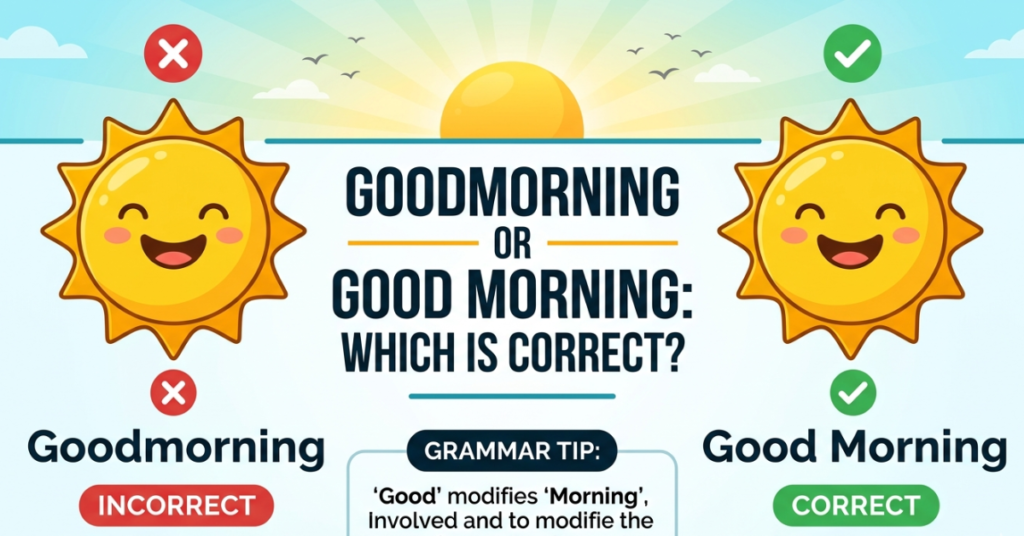
“Good morning” (two words) is correct.
“Goodmorning” (one word) is incorrect in standard English.
Why “Good Morning” Is Correct
“Good morning” is a phrase made up of:
- “Good” (an adjective)
- “Morning” (a noun)
Together, they form a greeting—similar to:
- Good afternoon
- Good evening
Because it’s not a compound word, it should always be written as two separate words.
Is “Goodmorning” Ever Acceptable?
Technically, no—at least not in formal writing.
However, you might see goodmorning used:
- In casual texts or chats
- In social media captions
- As part of branding or usernames
Even then, it’s considered informal and not grammatically correct. If you’re writing professionally, stick with “good morning.”
Good Morning in Emails: Best Practices
When it comes to emails, getting your greeting right matters more than you think.
Correct Email Usage
- Good morning, Sarah
- Good morning team
- Good morning everyone
Incorrect Email Usage
- Goodmorning Sarah
- Goodmorning team
Tips for Professional Emails
- Always capitalize “Good” at the beginning.
- Add a comma when addressing someone directly.
- Keep it simple and polite.
Example:
Good morning, Ahmed,
I hope you’re doing well…
This small detail can instantly make your email feel more polished.
Good Morning in Text Messages and Chats
In casual communication, rules are often relaxed—but clarity still matters.
Common Text Examples
- Good morning! Hope you slept well
- Good morning, have a great day!
- Morning! (shortened version)
While some people type goodmorning for speed, using “good morning” still looks cleaner and more thoughtful.
Popular Good Morning Messages and Quotes
A simple greeting can go a long way. Here are a few ideas you can use:
Positive Good Morning Messages
- Good morning! Today is a fresh start—make it count.
- Rise and shine! Wishing you a productive day ahead.
- Good morning! Small steps today lead to big results tomorrow.
Inspirational Quotes
- “Each morning we are born again. What we do today matters most.”
- “Success comes to those who wake up ready to act.”
Sweet Good Morning Messages
- Good morning! Thinking of you makes my day brighter.
- Wake up and smile—you’ve got this!
Good Morning GIFs, Images, and Trends
Visual greetings are everywhere now—especially on messaging apps.
Why People Love Them
- They’re quick and expressive
- They add emotion and personality
- They’re perfect for daily check-ins
Popular types include:
- Animated GIFs with sunrises
- Motivational quote images
- Cute or funny morning memes
Even when sharing visuals, pairing them with a properly written “good morning” message adds a nice touch.
Common Grammar Questions Answered
Is it “goodmorning or good morning?”
Always good morning (two words).
Why do people write “goodmorning”?
Mostly due to:
- Typing habits
- Informal texting
- Lack of awareness of grammar rules
Is “morning” alone acceptable?
Yes, in casual settings:
- Morning!
- Morning, John!
But it’s less formal than “good morning.”
When Should You Use “Good Morning”?
Use it in:
- Emails and professional communication
- Formal greetings
- Polite conversations
Avoid shortcuts in:
- Job applications
- Business emails
- Academic writing
FAQs About Goodmorning or Good Morning
1. Is “goodmorning or good morning” correct?
“Good morning” is the correct form. “Goodmorning” is not standard English.
2. Can I use “goodmorning” in texts?
You can, but it’s informal and not recommended for proper writing.
3. How do you write good morning in an email?
Write it as “Good morning,” followed by the recipient’s name.
4. Is “good morning” capitalized?
Capitalize “Good” at the start of a sentence or greeting.
5. Are there alternatives to “good morning”?
Yes:
- Morning
- Hello
- Hi there
Conclusion: Keep It Simple and Correct
So, when it comes to goodmorning or good morning, the answer is clear: always go with “good morning.” It’s grammatically correct, widely accepted, and appropriate in both casual and professional settings.
Small details like this can make a big difference in how your communication is perceived. Whether you’re sending an email, a text, or a cheerful message to start the day, using the right form shows attention to detail and respect for language.
Next time you type it out, you’ll know exactly what to do—no second guessing needed.