
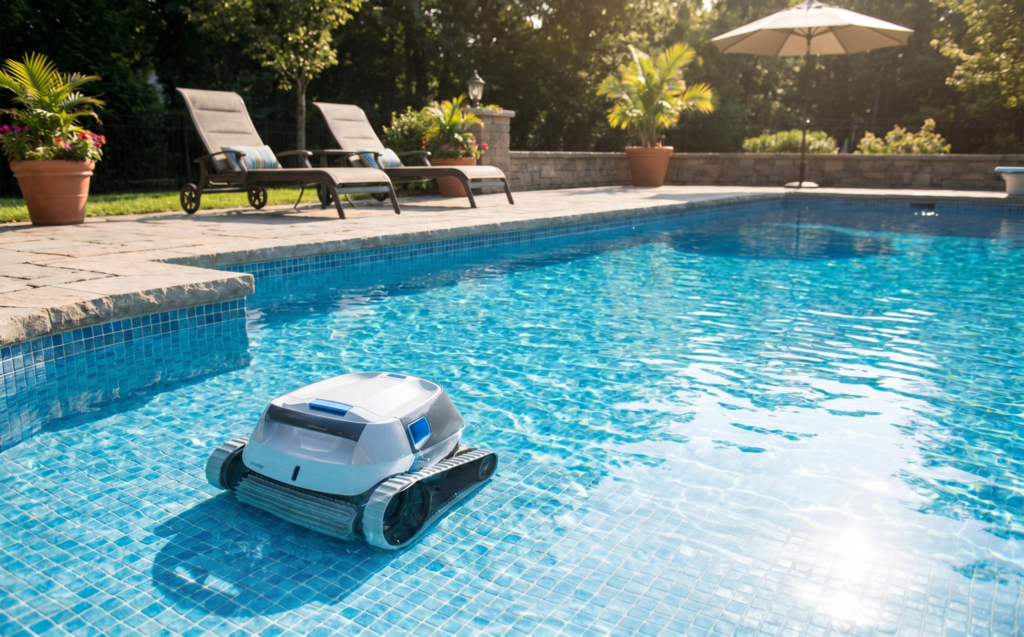

You walk outside on a Saturday morning, coffee in hand, planning to enjoy the pool. Then you notice the leaves settled in the corner. A line of scum along the waterline.
A layer of fine dust across the floor. What was supposed to be a relaxing weekend turns into another cleaning session before you even get in the water.
This is a familiar pattern for many backyard pool owners. The good news is that with a structured approach, you can cut down the repetitive cleaning work significantly without cutting corners on water quality. Here is a straightforward process that works for most residential pools.
Step 1: Identify What Your Pool Actually Collects
The first step sounds simple, but it makes everything else easier: figure out what ends up in your pool and how often.
Not every pool deals with the same kind of debris. A pool under oak trees collects leaves and acorns. One in an open yard gets more dust and wind-blown sediment. Pools near bare soil or recent landscaping see sand and silt showing up after every rain.
Here is a quick breakdown of common debris types and where they tend to come from:
| Debris Type | Common Source | How Often |
| Leaves and seeds | Trees near the pool | Daily during shedding seasons |
| Fine dirt and dust | Wind, dry weather, nearby soil | Every day to every other day |
| Sand and silt | Runoff, construction work nearby | After rain or wind events |
| Algae or scum line | Warm water, low circulation | Weekly or during warmer months |
| Pollen and organic film | Spring bloom, nearby plants | Seasonal, daily at peak times |
Once you know what your pool is up against, the next steps become much more specific to your situation rather than generic advice.
Step 2: Match a Cleaning Method to Each Task
Pool care involves a mix of tasks. Some are repetitive and predictable, which makes them good candidates for automation. Others need a human eye and only take a few minutes to handle directly.
Surface skimming removes floating leaves and bugs. A quick pass with a pole skimmer takes care of this in a couple of minutes. It is simple enough that automating it is usually not worth the effort.
Floor and wall cleaning is the part that eats up the most time. Vacuuming the floor and brushing the walls can take the better part of an hour depending on pool size. This is where having a robotic cleaner makes the biggest difference.
Water chemistry checks cannot be automated reliably. Testing and adjusting the chemical balance takes just a few minutes and should be part of your regular routine.
Filter basket and skimmer checks are quick manual tasks that help everything run smoothly. A quick rinse after heavy debris days keeps the system working efficiently.
Step 3: Fit Automation Into Your Weekly Routine
Once you know which tasks take the most time, the next question is what kind of cleaner fits your pool’s specific needs. The goal is not to buy the most advanced model. It is to find one that matches how your pool accumulates dirt and how much manual work you want to save.
When comparing options, these are the practical features worth paying attention to:
- Coverage pattern: whether the cleaner follows a systematic path or moves randomly
- Wall climbing: whether it reaches the waterline or stays on the floor only
- Filtration: how fine the internal filter captures particles
- Cycle scheduling: whether the device can run on a timer without supervision
Once you have a sense of these factors, choosing a robotic pool cleaner becomes a matter of matching features to your pool’s regular cleaning needs rather than guessing.
Step 4: Set Up a Simple Weekly Checklist
A consistent schedule is what makes the routine work. Once the cleaner is part of your week, the rhythm looks something like this:
- Monday: Let the cleaner run its cycle. Give the surface a quick skim if leaves have blown in over the weekend.
- Wednesday: Check the cleaner’s filter basket and rinse it if needed. Run another cycle.
- Friday: Run the cycle again. Test the water chemistry and make any small adjustments.
- Weekend: A short visual inspection. Brush the steps and shallow areas if there is any buildup. Empty and rinse the filter cartridges thoroughly.
Most of the heavy cleaning happens during the week while the cleaner runs on its own. The weekend check becomes a light task instead of a full cleaning session.
Step 5: Avoid These Common Time-Wasters
Even with a good routine, a few small habits can make pool maintenance take longer than it should.
Leaving the filter basket unrinsed after a heavy cycle. A clogged basket reduces water flow and makes everything run less efficiently.
Letting leaves sit in the water for too long. As they break down, they release nutrients that feed algae, which means more scrubbing and more chemicals down the line.
Storing the cleaner in direct sunlight between uses. UV exposure speeds up wear on seals and plastic parts.
Running the cleaner less often during cooler months. Irregular use lets debris settle and dry, making it harder to remove when regular use picks back up.
Conclusion
Pool maintenance does not have to be a weekend project every single week. By understanding what your pool collects, matching the right tools to each task, and keeping a simple weekly rhythm, you can keep the water clear without letting it take over your schedule.
The approach that works best is the one that fits your pool’s specific environment and your own maintenance habits.